When Delight Becomes a Debt: The Hidden Cost of Premium Packaging on Customer Lifetime Value
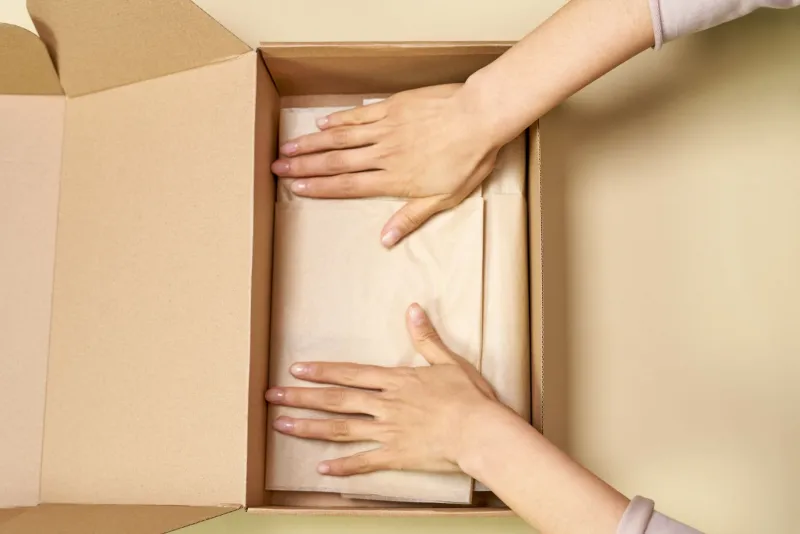
There is a moment in almost every direct-to-consumer brand's evolution when leadership decides the box matters as much as what's inside it. Custom tissue paper, hand-stamped inserts, layered reveals, and branded ribbon pulls become line items on the product roadmap. The logic is intuitive: a memorable unboxing creates shareable moments, reinforces brand identity, and signals quality before the customer ever touches the product.
What that logic rarely accounts for is what happens on the second purchase—and the third.
The Novelty Expectation Cycle
Premium packaging operates on the same psychological mechanics as any other surprise-and-delight tactic: the first exposure generates disproportionate emotional impact. Customers who receive an unexpectedly beautiful package feel genuinely rewarded. Many do share the experience. Some do return.
But delight is not a renewable resource in a static format. Once a customer has received your signature packaging twice, the emotional response diminishes significantly. What was a pleasant surprise becomes an expectation. And expectations, unlike surprises, generate no loyalty dividend—they simply raise the floor of what a customer considers acceptable.
This is where many brands encounter what might be called the novelty expectation cycle. To sustain the emotional response that originally drove social sharing and repeat purchases, they feel compelled to refresh the packaging experience seasonally or for special occasions. Each refresh adds design costs, minimum order quantities for new materials, and operational complexity in the warehouse. The packaging investment compounds without a proportional return on the back end.
What the Fulfillment Numbers Actually Reveal
Beyond the psychology, there is a straightforward unit economics problem that premium packaging creates and that most e-commerce operators underestimate at scale.
Custom boxes, inserts, and specialty materials add weight and dimensional volume to shipments. Even modest increases in package dimensions can push orders into higher carrier rate brackets—a cost that recurs on every transaction. Warehouse pick times increase when packaging requires additional steps. Return processing becomes more complicated when specialty materials must be handled separately.
When brands model the cost of premium packaging, they typically account for materials procurement. They rarely account for the compounding effect of slightly elevated shipping costs across thousands of annual orders, the incremental warehouse labor per unit, or the write-down on seasonal packaging materials that don't move before the next refresh cycle.
For high-average-order-value categories—luxury goods, curated subscription boxes, premium skincare—the math can still work favorably. The packaging cost represents a small percentage of the total transaction, and the target customer genuinely values the presentation as part of the product experience.
For mid-market brands selling consumables, apparel, or household goods with AOVs in the $30 to $80 range, the calculus is far less forgiving. A $2.50 incremental packaging cost on a $45 order is not a trivial line item when margins are already under pressure from customer acquisition costs and return rates.
The One-Time Buyer Problem
Perhaps the most underappreciated dynamic in premium packaging strategy is its disproportionate appeal to one-time buyers.
Customers who are drawn to a brand primarily because of its aesthetic presentation—the packaging, the visual identity, the unboxing ritual—are often less committed to the underlying product than customers who discovered the brand through product reviews, ingredient efficacy, or peer recommendations. They are, in effect, buying an experience rather than a solution.
Experience-driven buyers churn faster. They are more likely to seek the next novel brand rather than reorder from a familiar one. They are also more likely to have been acquired through visually driven channels—Instagram, TikTok, Pinterest—where the packaging itself served as the creative asset that drove the initial click.
This creates a troubling feedback loop: the packaging investment attracts a customer profile that is inherently less likely to generate long-term lifetime value, while the cost of that packaging continues to be borne across all orders, including those from high-retention customers who would have reordered regardless of whether the box had a ribbon pull.
When Packaging Investment Actually Pays Off
None of this is an argument for shipping products in plain brown cardboard. Packaging communicates brand values, protects product integrity, and does influence first impressions in meaningful ways. The question is not whether to invest in packaging—it is how to calibrate that investment against actual customer behavior data.
Several conditions tend to indicate that premium packaging will generate positive returns on lifetime value:
The product is itself a gift. When customers purchase with the explicit intent to give the product to someone else, packaging is functional, not merely aesthetic. The presentation is part of the value proposition, and the recipient's reaction directly influences whether the gifter becomes a repeat buyer.
The category has a strong ritual component. Specialty coffee, artisan spirits, curated wellness products, and similar categories involve a consumption ritual that the packaging can meaningfully enhance. Customers in these categories tend to be more engaged with the full experience and more likely to return for the complete sensory package.
The AOV supports the cost. As a general principle, packaging costs should not exceed two to three percent of the average order value for replenishment-driven products. For one-time or infrequent purchase categories, higher ratios can be justified if the packaging drives word-of-mouth acquisition.
The packaging is consistent, not seasonal. Brands that commit to a signature, consistent packaging aesthetic—rather than chasing seasonal novelty—build a recognizable identity without the cost spiral of perpetual refreshes.
Auditing Your Packaging Strategy for Profitability
For brands that suspect their packaging investment may be generating more delight than revenue, a structured audit is the appropriate starting point.
Begin by segmenting customers by acquisition channel and calculating retention rates and second-order rates by segment. If customers acquired through visually driven channels—where packaging was a primary creative element—show materially lower retention than customers acquired through search or review platforms, that is a meaningful signal.
Next, model the true all-in cost of your current packaging per order, including materials, dimensional weight impact on shipping, incremental warehouse labor, and any write-down on unused seasonal inventory. Compare that figure against the incremental revenue attributable to packaging-driven social sharing by tracking referral codes or UTM parameters on packaging inserts.
Finally, consider a controlled test. A subset of orders fulfilled with simplified packaging—still clean and brand-consistent, but without the premium elements—can reveal whether repeat purchase rates, return rates, or average order values differ in any statistically significant way. In many cases, they do not.
The Smarter Investment Signal
The brands that grow most efficiently over time are not necessarily those with the most memorable boxes. They are the ones that understand precisely which investments drive durable customer behavior and which investments simply create the appearance of brand equity without the underlying economics to support it.
Premium packaging is not inherently wasteful. But treating it as a default growth lever—rather than a deliberate, measured component of a broader retention strategy—is a pattern that erodes margins quietly, order by order, long before it appears on a financial report.