The Support Automation Illusion: How AI Chatbots Create the Costs They Promise to Eliminate
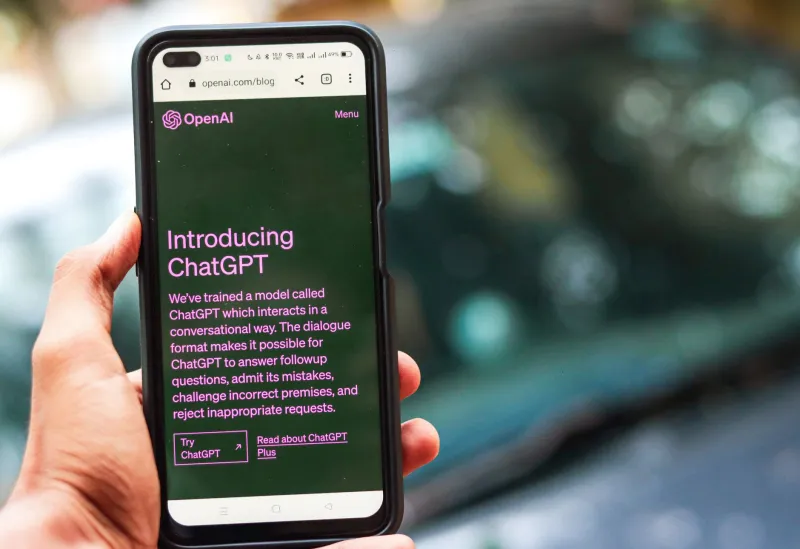
The business case for AI-powered customer support is, on the surface, straightforward. Reduce the cost per interaction. Eliminate wait times. Scale service capacity without adding headcount. For e-commerce operators managing high inquiry volumes across a fragmented customer base, those promises carry real appeal.
The problem is that the business case is typically built on a flawed assumption: that the volume of customer inquiries is a fixed input, and that the only variable is the cost of resolving each one. In practice, the volume of inquiries is highly sensitive to the friction involved in asking them. Lower that friction, and you do not simply resolve the same questions more cheaply—you generate entirely new questions that would never have been asked.
Friction as a Filter
In customer service, friction has traditionally served as a natural volume regulator. When reaching a support agent required navigating a phone tree, waiting on hold, or composing a detailed email, customers made implicit cost-benefit calculations before initiating contact. Minor uncertainties—questions about return windows, shipping estimates, product compatibility—were often resolved through self-service resources, or simply abandoned when the effort of asking exceeded the value of the answer.
This is not a failure of customer service. It is a functional property of support systems that many operators have not recognized as valuable until it disappears.
AI chatbots and live-chat widgets eliminate nearly all of that friction. A question that might not have been worth a five-minute phone call becomes entirely worth a ten-second typed query when a responsive interface is available. The result is a category of inquiry that support automation specialists sometimes call induced demand—questions that exist because the channel exists, not because the customer's need was pressing.
Measuring What the Dashboard Doesn't Show
Most support automation platforms report metrics that make their tools look unambiguously effective: average handle time, cost per resolved ticket, first-contact resolution rate, customer satisfaction scores. These are legitimate measures, but they share a common limitation—they evaluate the efficiency of resolving inquiries without accounting for whether those inquiries should have been generated in the first place.
A more complete profitability analysis requires a different set of questions.
What is the total inquiry volume change since automation was deployed? If your support platform handled 4,000 contacts per month before chatbot implementation and now handles 9,000 contacts at a lower cost per contact, the per-unit efficiency gain may be real, but the aggregate cost may have increased. The relevant comparison is not cost per ticket—it is total support expenditure relative to total orders processed.
What percentage of chatbot interactions convert to a purchase or prevent an abandonment? Not all support contacts are equivalent. A pre-purchase question about sizing that results in a completed order is fundamentally different from a post-purchase question about a tracking update that the customer could have found independently. Conflating these in aggregate resolution metrics obscures the true value distribution of your support volume.
What is the downstream behavior of customers who use the chatbot versus those who do not? If chatbot users show higher return rates, lower average order values on subsequent purchases, or elevated churn rates, those outcomes belong in the cost model for the automation investment.
The Escalation Cost That Compounds Quietly
There is a second cost dynamic in support automation that receives even less attention than induced demand: the cost of escalation.
AI-powered chatbots handle routine, well-structured inquiries effectively. They handle complex, emotionally charged, or ambiguous inquiries poorly. And when those inquiries arise—as they inevitably do—they typically result in an escalation to a human agent. The customer, already frustrated by an unsatisfying chatbot interaction, arrives at the human agent more agitated than they would have been had they reached a person immediately.
This escalation path is more expensive than a direct human contact for several reasons. The agent must review the prior chatbot exchange to understand context. The customer requires additional time to de-escalate before productive resolution is possible. And the resolution itself may require accommodations—expedited shipping, partial refunds, goodwill credits—that would not have been necessary had the issue been handled cleanly on first contact.
When escalation rates are factored into the true cost model, the per-ticket economics of support automation often look materially less favorable than the platform-reported figures suggest.
When Automation Actually Improves Margins
None of this is an argument against support automation as a category. There are genuine use cases where AI-powered tools reduce costs without generating offsetting liabilities.
Order status inquiries are the clearest example. Customers checking on shipment tracking represent a high-volume, low-complexity interaction that automation handles reliably, and the inquiry volume is not meaningfully induced by the availability of the channel—these customers were going to check their order status regardless. Deflecting these contacts from human agents to an automated interface is a straightforward efficiency gain.
Similarly, FAQ-style pre-purchase questions about return policies, product specifications, and shipping options can be handled effectively by well-configured chatbots, provided the information is accurate and current. The key variable is configuration quality: a chatbot that provides inaccurate information about a return policy generates downstream costs in disputes and exceptions that far exceed the savings from handling the initial inquiry automatically.
The pattern that tends to generate net-positive outcomes is targeted automation—deploying AI tools on a defined, narrow set of high-volume, low-complexity inquiry types while preserving human access for everything else. The pattern that tends to generate the cost spiral described above is broad automation, where the default response to any customer inquiry is a chatbot interface, and human access is deliberately obscured.
Designing for Profitable Support, Not Just Efficient Support
The strategic reframe that separates high-performing e-commerce operators from those who discover their automation investment has not delivered is the distinction between support efficiency and support profitability.
Efficiency asks: how cheaply can we resolve each contact? Profitability asks: which contacts should we be resolving at all, and what is the revenue and retention impact of how we resolve them?
Operators who approach support automation through a profitability lens tend to make different decisions. They invest in self-service content—detailed size guides, comprehensive FAQ pages, proactive shipping notification emails—that reduces inquiry generation at the source rather than simply lowering the cost of handling inquiries after they arise. They measure the revenue impact of pre-purchase support interactions separately from the cost of post-purchase support contacts. They set escalation thresholds deliberately, ensuring that high-value customers or high-complexity issues reach human agents without unnecessary friction.
They also periodically audit their chatbot interaction logs for patterns that indicate the tool is generating induced demand rather than deflecting genuine need—high volumes of questions about information that is already clearly published on the website, for instance, or repeat contacts from the same customer on the same issue.
The goal of support automation in e-commerce is not to answer every question as cheaply as possible. It is to build a support infrastructure that protects margins, retains customers, and does not inadvertently create the volume problem it was designed to solve.